
The Cays
The Abaco cays — Hope Town, Man-O-War, Green Turtle, and how to island-hop between them
Verified
The Abacos are defined by the outer cay chain, a string of small islands running parallel to Great Abaco along the edge of the Sea of Abaco, a sheltered inland waterway that is among the premier sailing grounds in the Atlantic. The cays are connected to Marsh Harbour (the main town on Great Abaco) by ferry and water taxi. Each cay has its own distinct character; touring several in a single trip is both feasible and the standard way to experience the Abacos.
Hurricane Dorian made landfall as a Category 5 storm in September 2019 and caused catastrophic damage across the Abacos. The outer cays have largely recovered, but verify current conditions for any specific property or service before booking.
Elbow Cay
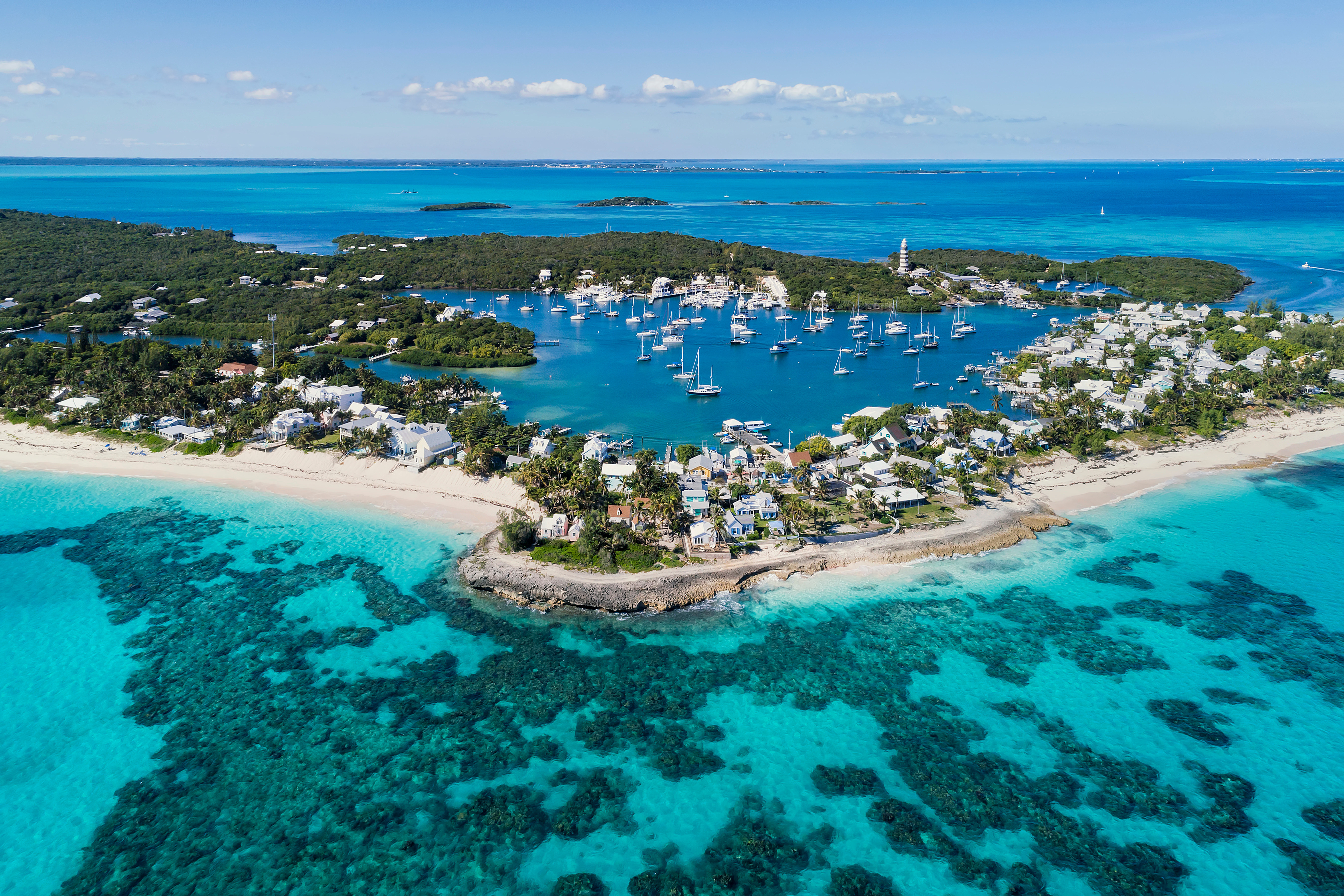
The most-visited cay in the Abacos. Elbow Cay is home to Hope Town, a small Loyalist settlement dating to the 18th century, and the Hope Town Lighthouse, a candy-striped red-and-white tower that is one of the last hand-wound kerosene lighthouses still in active operation in the Bahamas.
The lighthouse stands above the harbour entrance and can be climbed. The view from the top, over the anchorage, the cay chain, and the reef beyond, is the defining image of the Abacos and worth the effort on its own. The lighthouse keeper often welcomes visitors and explains the hand-wound mechanism.
Hope Town itself is car-free. Golf carts are the standard transport. The harbour is lined with wooden buildings painted in pastel shades. There are a handful of restaurants, small shops, and inns. The visual appeal is genuine and unmanufactured, the preservation of the Loyalist streetscape makes it one of the more distinctive villages in the Bahamas.
Tahiti Beach sits at the southern tip of Elbow Cay: a sandspit of turquoise water on all sides that appears and partially disappears with the tide. It is one of the most photographed spots in the Bahamas and best visited at or near low tide when the sandspit is fully exposed. Accessible by dinghy or rental boat from Hope Town.
Access: Ferry from Marsh Harbour (approximately 20 minutes). Golf carts available for rent on-island. Albury's Ferry is the primary operator between Marsh Harbour and the outer cays.
Man-O-War Cay
Man-O-War is the most distinctly functional of the outer cays, a working island that has maintained its identity while the others have leaned increasingly toward tourism. The cay has a boatbuilding tradition predating modern fiberglass construction, and while large-scale wooden boatbuilding has largely given way to repair and maintenance work, the heritage is visible in the boatyards and in the continuing production of canvas goods, sailbags, duffels, custom covers, and accessories made by local businesses that have been a Man-O-War specialty for generations.
The island is dry: no alcohol is sold or permitted anywhere on the cay, a policy rooted in the Methodist faith of the founding Loyalist families. This has been maintained without exception. There are no cars.
Man-O-War is quieter and less visited than Hope Town and provides a clearer sense of how the outer cay communities originally functioned. Worth a half-day visit for the canvas goods and the atmosphere.
Access: Ferry from Marsh Harbour via Albury's Ferry.
Great Guana Cay
Great Guana Cay is primarily known for Nippers Beach Bar and Grill, a large beach bar positioned at the edge of the Atlantic shore. On Sundays, Nippers runs a pig roast and beach party that draws visitors from across the Abacos, loud, crowded, and deliberately celebratory. It is the most popular day trip in the Abacos and a fixture of the Abacos experience for repeat visitors. The Sunday ferry fills up in peak season; arrive early or arrange a private water taxi.
On other days of the week, Great Guana Cay is considerably quieter. The Atlantic-facing beach in front of Nippers is a long, powdery stretch with genuine wave energy from the open ocean, one of the better beach-and-bar combinations in the Bahamas regardless of the crowd level.
The cay also has Grabbers Bed, Bar & Grill on the harbour side, a quieter alternative with calmer water.
Access: Ferry from Marsh Harbour via Albury's Ferry (approximately 30 minutes).
Green Turtle Cay
The northernmost cay on the main Abacos circuit, Green Turtle Cay has the most intact Loyalist heritage architecture in the Abacos. The settlement of New Plymouth on the western shore has colonial-era wooden buildings, a small harbour, and the Albert Lowe Museum, a locally run museum documenting Abaco's Loyalist history and the Lowe family's contributions to boatbuilding and the community.
The Green Turtle Club has been a reliable stop for cruising sailors for decades, with a marina, restaurant, and bar. The cay's harbour anchorage is one of the more protected in the Abacos. Several attractive beaches lie around the White Sound and Black Sound areas.
Green Turtle Cay sustained damage from Hurricane Dorian but has recovered substantially. It is the cay in the Abacos that most rewards slow exploration on foot: New Plymouth's narrow streets and old buildings are worth an unhurried hour or two.
Access: Ferry from Treasure Cay airport dock or by private boat; Albury's Ferry operates routes in this direction.
No Name Cay
A small, uninhabited cay adjacent to Green Turtle Cay, No Name Cay is home to a colony of swimming pigs, a lesser-known counterpart to the famous Big Major Cay pigs in the Exumas. The pigs are habituated to visitors and will approach boats. The encounter is less commercialized and less visited than the Exuma version, which is part of its appeal.
No facilities exist on the cay. Typically visited as a short detour from Green Turtle Cay rather than as a stand-alone destination.
Access: By boat from Green Turtle Cay; a short crossing.
- Post-Dorian recovery conditions change, verify current status of any specific location before travel.*