
At a Glance
Character of the Islands
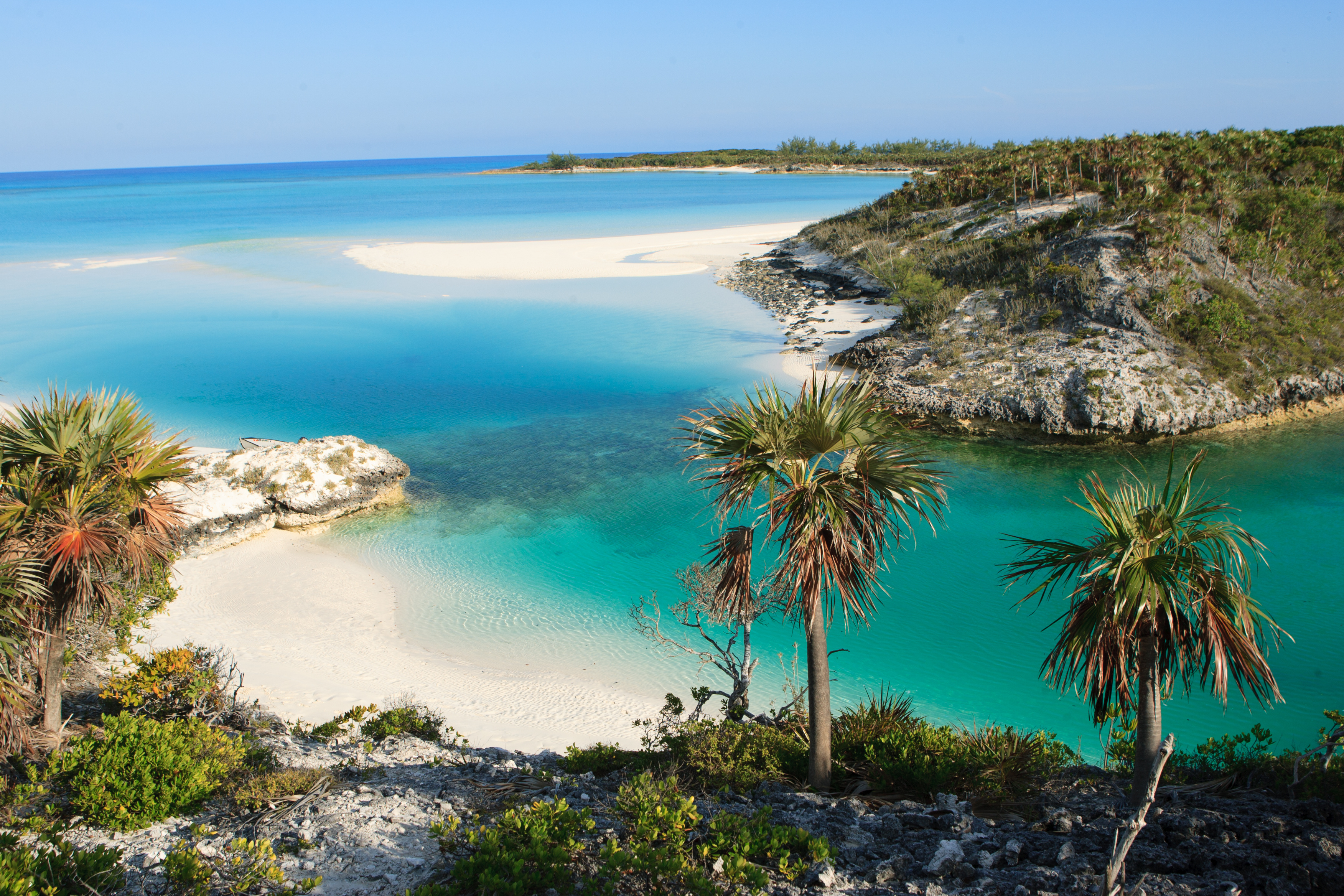
The Exumas are a chain of approximately 365 cays stretching roughly 100 miles through the central Bahamas, southeast of Nassau. Unlike Nassau's busy cruise-ship economy, the Exumas are defined by nature, solitude, and water that independent travelers consistently describe as among the clearest they have ever seen anywhere in the world, comparable in color and transparency to French Polynesia, and often likened to sapphire-blue or Gatorade-colored in its intensity.
The essential character of the Exumas is one of unhurried natural beauty. Visitors repeatedly remark on arriving at beaches and finding themselves completely alone, even during moderately busy travel periods. This stands in sharp contrast to Nassau's beaches, which draw cruise-ship crowds. The Exumas reward slow exploration: there are simply too many beautiful spots to name, and nearly every bend in the water reveals another unmarked sandbar, hidden cove, or empty beach.
The island chain is anchored by Great Exuma and the smaller Little Exuma to the south, connected by a one-lane bridge. Georgetown, the main town on Great Exuma, sits on Elizabeth Harbor and serves as the practical hub, the place to shop, eat, rent boats, and organize excursions. North of Georgetown, the cays become progressively more remote and nature-dominated, eventually entering the protected Exuma Cays Land and Sea Park.
The Water
The water is the central fact of the Exumas. It is extraordinarily clear, shallow enough over sandbars to read the bottom in fine detail, transparent enough in open coves that snorkelers can see everything from the surface. The color shifts from pale turquoise over sand flats to deep sapphire in channels, with the full spectrum visible at once across any given anchorage. Several travelers independently describe it as the best water they have ever seen. On good days, visibility reaches 100 feet or more.
This clarity is partly a function of geography: the Exumas sit on the edge of a shallow bank, with warm, calm water on the leeward side of the cays and the open Atlantic on the windward side. The sheltered inner waters are ideal for snorkeling, kayaking, and swimming. Strong currents do exist, particularly at cuts between cays and at spots like Thunderball Grotto, and warrant caution (see Exumas Experiences).
Notable Cays
The Exumas' most celebrated experiences are concentrated in a handful of named cays running north of Georgetown. See Exumas The Cays for detailed coverage of each.
| Cay | Character |
|---|---|
| Allen's Cay | Rock iguana colony; endemic species; first stop northbound from Nassau |
| Leaf Cay | Second iguana cay; usually visited alongside Allen's |
| Highbourne Cay | Privately owned; eight beaches; luxury marina |
| Norman's Cay | Drug-running history; snorkelable plane wreck; marina and restaurant |
| Shroud Cay | Mangrove creek passage to Atlantic beach; within the Land and Sea Park |
| Warderick Wells Cay | Land and Sea Park HQ; Boo Boo Hill; spectacular anchorage |
| Compass Cay | Habituated nurse sharks; Rachel's Bubble Bath; cross-island Atlantic trail |
| Staniel Cay | Inhabited village; marina; base for Thunderball Grotto and Pig Beach |
| Big Major Cay | The swimming pigs; the defining Exuma experience |
| Farmer's Cay | Mile-Long Sandbar located just south of the island |
The Exuma Cays Land and Sea Park covers 109 square miles and encompasses over 130 islands and cays. It is a strict no-take marine protected area: fishing and shelling are prohibited within its boundaries. This protection is the primary reason the Exumas hold the Bahamas' richest reef ecosystem. Shroud Cay and Warderick Wells sit within the park; the difference in reef health compared to unprotected areas is visible.
Key Experiences
The Exumas' headline experiences all require a boat to reach. See Exumas Experiences for full detail on each.
- Swimming Pigs at Pig Beach (Big Major's Cay), The most iconic attraction in the Exumas; about 25 pigs and piglets swim out to meet arriving boats. Half-day and full-day trip options are available from Georgetown.
- Thunderball Grotto (near Staniel Cay), James Bond sea cave with stalactites, shafts of light, and abundant marine life; visit at low tide
- Nurse Sharks at Compass Cay, Habituated sharks in a small marina dock; touchable and calm
- Iguana Island (Allen's Cay), Colony of endangered Northern Bahamian Rock Iguanas, the first stop north of Nassau on sailing charters
- Warderick Wells, Exuma Cays Land and Sea Park, The park's scenic heart; mooring field, mangrove creeks, and the famous Boo Boo Hill
- Staniel Cay, The practical hub for day-trips; village, marina, yacht club restaurant, and its own airport Port of Entry
- Stocking Island, Chat & Chill beach bar, Starfish Beach, and Sand Dollar Beach, all across Elizabeth Harbor from Georgetown
The Inhabited Islands: Great Exuma and Little Exuma
Great Exuma
The main island is traversed by the Queen's Highway, a single road running roughly north-south. Driving is on the left. The road is paved but notable for significant potholes. Rental car drivers should take corners slowly and be prepared to cede narrow sections to oncoming traffic. A rental car is effectively necessary for any independent beach exploration on the island.
Beaches accessible by car from north to south include: Exuma Point Beach (snorkeling and sandbar), Coco Plum Beach (sandbars at the south end), Farmers Hill Beach, Three Sisters Beach (named for three prominent offshore rocks), Mosstown Beach, Tar Bay Beach, Hooper's Bay Beach (sea turtles present, best earlier in the day), and Jolly Hall Beach. Nearly all of these are consistently reported as uncrowded to completely empty.
Georgetown itself has grocery stores (Smitty's is mentioned as one of the few), takeout restaurants, and a concentration of small eateries and beach bars, fewer options than Nassau but sufficient, and far less commercialized. Several travelers recommend picking up groceries for self-catering given the limited and sometimes slow restaurant service. Elizabeth Harbour, just off Georgetown, hosts Bahamian sloop sailing; young sailors there maintain the tradition actively.
Little Exuma
Connected to Great Exuma via a one-lane bridge, Little Exuma is quieter still. Key beaches include Pretty Molly Beach, Forbes Hill Beach (two distinct beach sections with snorkeling), and Tropic of Cancer Beach, a long, north-facing beach notable for straddling the geographic Tropic of Cancer line, with a rocky snorkeling area at one end. Tropic of Cancer Beach is reached via a left turn off the Queen's Highway onto a dirt road.
Practical Character Notes
Scale and remoteness. The Exumas feel genuinely remote. Grocery and dining options are limited. Self-catering is common and practical. Service can be slow by mainland standards, with one travel account mentioning a 90-minute wait for takeout. This is not a complaint so much as a calibration: the islands operate on island time, and adjusting expectations is part of the experience.
Crowds, or the absence of them. Across multiple independent accounts from different periods, visitors consistently report having entire beaches to themselves. This is the defining difference between the Exumas and Nassau, and the central reason many travelers strongly prefer the Exumas.
Boat access. A large portion of the Exumas' best experiences are only accessible by water. Renting a boat independently for a day (operators in Georgetown at Elizabeth Harbor, including Exuma Water Sports and men's water sports) or booking a full-day organized excursion from Georgetown are the two main options for visitors without their own vessel. Charter sailing is also a popular multi-day format (see Exumas Getting Around).
Swimming pigs vs. Nassau. Pig Beach is accessible from both Nassau (via day-trip boat tours, roughly $130–150 per person as of recent reports, verify before booking) and from the Exumas (as part of a full-day excursion from Georgetown, roughly $350 per person as of recent reports, verify before booking). The Exumas-based trip is shorter in boat transit time and generally the more natural way to experience the surrounding cays simultaneously.
Currency. The Bahamian dollar is pegged 1:1 with the US dollar; US dollars are accepted everywhere. Major credit cards (Visa, Mastercard) are widely accepted; American Express acceptance is less reliable. Bring some cash for smaller transactions.
Language. English is the official and everyday language throughout the Exumas.
Weather. Peak season runs roughly November through April/May, when northern visitors seek warmth. Average temperatures are around 78°F, similar to Miami or Key West. Hurricane season runs approximately June through October/November, a secondary reason for the off-peak designation of those months. Water temperatures are cooler in winter months, though still swimmable for most visitors. The sun sets early in winter, which compresses the useful daylight window for activities.
Most information sourced from traveler accounts dated 2025–2026. Prices, operating hours, and business names change, so verify locally before relying on specific figures.