
Locals' Favorites
Where Bahamians actually eat, drink, and spend time — local restaurants, beaches, and hangouts
Verified
Local Favorites: Where Bahamians Actually Go
Nassau locals and out-island residents have their own circuit of beaches, bars, and hangouts that rarely overlap with the cruise-ship itinerary. This article covers the real spots, starting with Nassau's beaches and extending to Harbour Island's local scene.
Nassau Beaches: The Local Rotation
Most visitors default to Cable Beach or Nassau's resort strips. Locals spread across a half-dozen beaches depending on what they want, and each has a distinct character.
Junkanoo Beach
The closest beach to the Nassau cruise port, with white sand and clear blue water. Locals use it, but it draws tourists heavily given the location. The bottom is rocky in places, and the initial water entry runs cold. Good for a quick swim if you're in the area; not where most Nassauvians spend a lazy Sunday.
Montague Beach
Northeast of downtown, Montague offers calm waves, clear water, and soft sand with shells scattered along the shore. Fort Montague sits nearby, which gives the area a bit of character. The calm water makes it genuinely good for families. This is a spot locals actually choose rather than default to.
Saunders Beach
A proper local beach: soft sand, calm waves, and a snorkeling stretch where fish concentrate. Seaweed accumulates further down the shore, so pick your entry point. If you want to see where Nassau residents spend weekend afternoons, this is it.
Adelaide Beach
On the south shore, Adelaide runs warm and calm. The beach has water swings and a genuinely interesting backstory: the surrounding community descends from freed enslaved Africans resettled here in the 1830s. Tree residue washes onto the sand, and the sand itself gets hot during midday. Worth visiting for the history as much as the swimming.
Jaws Beach
Inside Clifton Heritage Park on the western tip of New Providence, Jaws Beach filmed scenes from the original movie. Soft sand, calm waves, clear water, and enough history to give it conversation value. The park context means it connects to Bahamian heritage rather than just being another swimming spot.
Rose Island
About 14 miles long, with soft white sand, no shell debris, and light blue shallow water. You access it via shore excursion rather than a simple drive, which keeps the crowds manageable. The lack of shells makes it comfortable for walking the waterline, which puts it ahead of several Nassau-area beaches purely on underfoot texture.
Island Caves Beach
A smaller beach, family-friendly, with soft white sand and calm water. One side borders rocks, which limits the usable stretch. Good for a calm afternoon with children.
Sandyport Beach
Small but with stronger waves than most Nassau-area beaches. Soft sand and warm water. The wave size makes it slightly more interesting for adults who want actual surf movement rather than flat calm.
Coral Harbor Beach
Short shoreline with brown tree residue on the sand. Not a first choice.
Western Esplanade Beach
Western Esplanade, adjacent to Arawak Cay, sits close to the heart of Nassau and doubles as an event venue when the occasion calls for it. The Longest Table, an outdoor communal dining event organized by John Watling's Distillery and DPA, draws 500+ people to a single long table running the full length of the beach at sunset.
Local Food and Social Gathering
Bahamian cuisine centers on seafood and traditional dishes. Conch appears in multiple forms: conch salad (raw, marinated in lime juice and citrus with onion and hot pepper), conch chowder (hearty and rich), and conch ceviche (fresh preparation that lets flavor carry without heavy cooking). Peas and rice is the standard starch side across the islands.
Fish fries are the primary local social gathering and hangout, where Bahamians eat, drink, and spend time together. These are the spots where you see how the community actually congregates rather than how resorts package "local culture."
The Longest Table event at Western Esplanade is a different format but the same communal impulse: hundreds of locals seated together at sunset for a shared meal. It is one of the larger organized gatherings on the island and worth tracking if the timing lines up with your visit.
Harbour Island: The Out-Island Local Scene
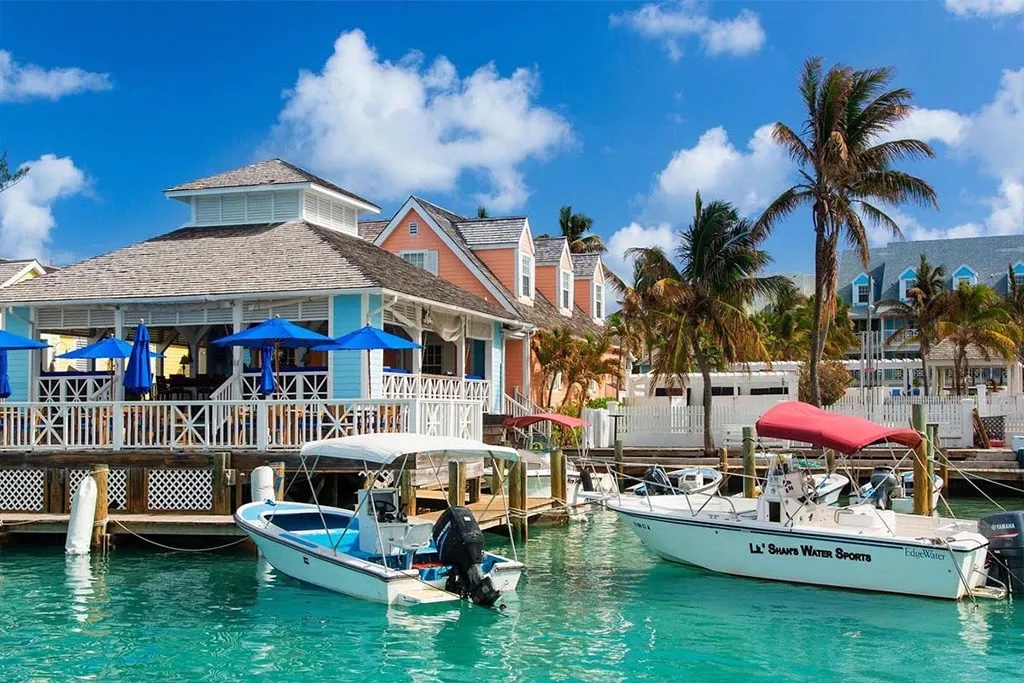
Harbour Island sits off the northeastern tip of Eleuthera, about three miles long by one mile wide. You reach it by water taxi from Eleuthera. The main settlement is Dunmore Town, a grid of pastel clapboard houses that qualifies as one of the most intact historic towns in the Bahamas. See also Hidden Gems for more on out-island destinations worth the ferry trip.
Pink Sand Beach
The three-mile stretch of pink sand on Harbour Island's Atlantic side gets its color from microscopic coral insects whose shells mix into the sand. It is the single most recognized feature of the island and worth the visit. Locals treat it as their backyard rather than a bucket-list stop, which tells you something about the quality.
Where Locals Eat and Drink
Queen Conch, in Dunmore Town, makes conch ceviche from scratch. Conch is the Bahamas' national dish, and ceviche preparation lets the fresh flavor carry without heavy cooking. This is the right place to eat it on the island.
The drink to order is a Goombay Smash: pineapple juice, orange juice, apricot brandy, and rum. It is the de facto local cocktail across the Bahamas, and Harbour Island bars make it well.
Gusty's sits on the water with an outdoor deck and a sand floor inside. The combination of outdoor deck, water views, and sand underfoot makes it the most relaxed bar setting on the island.
Vic Hum Club runs live music and has an open-air basketball court attached, which is an unusual combination that reflects how the island's social life actually works: informal, outdoor, and multigenerational.
Tingum Village Hotel is one of the oldest locally owned hotels on the island. On Saturdays, the Brilanders, a local band, perform there. If you want a single night that captures Harbour Island's social culture rather than its resort scene, Saturday at Tingum Village is it.
Shopping Local
Dilly Dally carries local books, Bahamian music, homemade jams and chutneys, and local calendars. It is the kind of shop that actually stocks what Bahamians produce rather than imported trinkets.
A and A Hidden Treasures sells handmade Bahamian straw bags woven from plaited dried palm leaves. Straw work is a traditional Bahamian craft, and buying directly from a local shop rather than a cruise-ship gift counter means the money and the craft stay connected to the right people.
For groceries, Piggly Wiggly is the island's small grocery store. Good to know if you're staying in a rental and need supplies.
A Note on Local Rum
Pin Drop Rum, a blend of 10- and 12-year-old Caribbean rums, won a gold medal in the premium category at the St. Barth Caribbean Rum Awards and launched in the United States in early 2026. It has Harbour Island connections and is the kind of bottle worth picking up if you see it.
For broader context on Bahamian culture and how to interact respectfully in local spaces, see Culture & Etiquette.
Recent sources
Recent sources
On This Page
- Local Favorites: Where Bahamians Actually Go
- Nassau Beaches: The Local Rotation
- Junkanoo Beach
- Montague Beach
- Saunders Beach
- Adelaide Beach
- Jaws Beach
- Rose Island
- Island Caves Beach
- Sandyport Beach
- Coral Harbor Beach
- Western Esplanade Beach
- Local Food and Social Gathering
- Harbour Island: The Out-Island Local Scene
- Pink Sand Beach
- Where Locals Eat and Drink
- Shopping Local
- A Note on Local Rum